How I worked
The search had many owners: a product team in Vienna, a corporate identity team in Munich, developers in The Hague, 38 member states with their own localised versions, and millions of users. I sat in the middle of all of them.
Guiding

Leading
- The Hague
Collaborating, aligning & validating with
The challenge
The users of this tool range from curious inventors to patent experts who search all day. They all struggled with the same things: moving back and forth between the results list and a patent’s details, refining a search, and building complex queries.
What I did
Research, design, specify, and start again
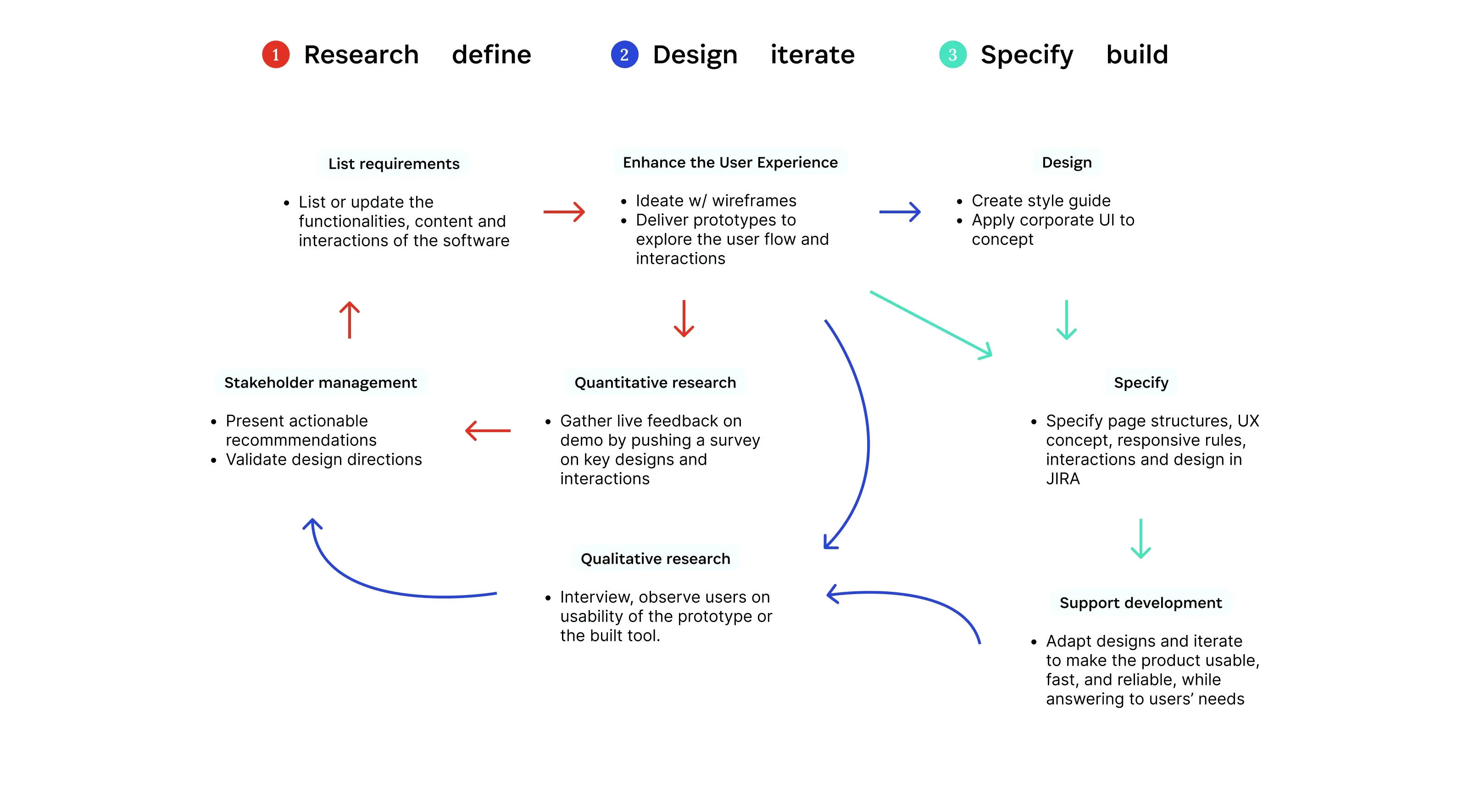
I ran the project as a loop: gather requirements and research, design and test, then specify and support the build, and feed what we learned back into the next round.
Found the right structure
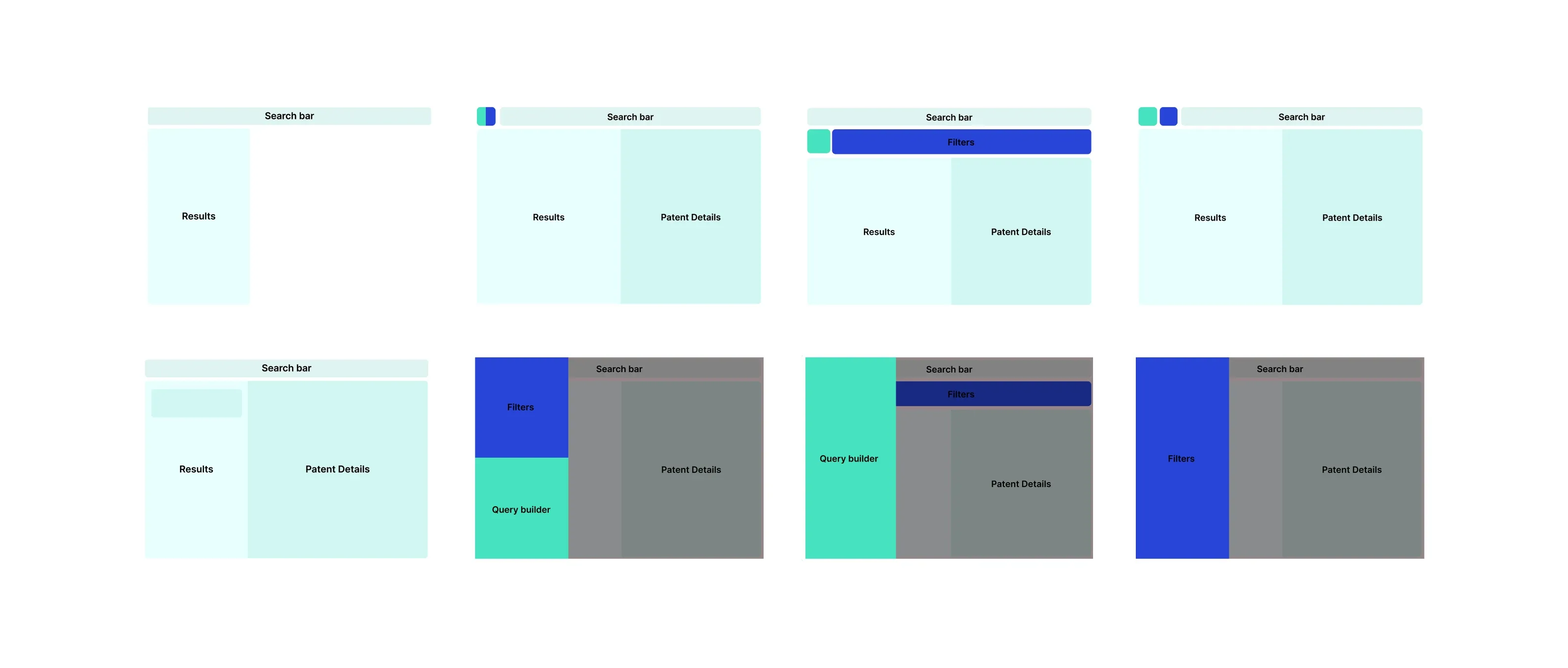
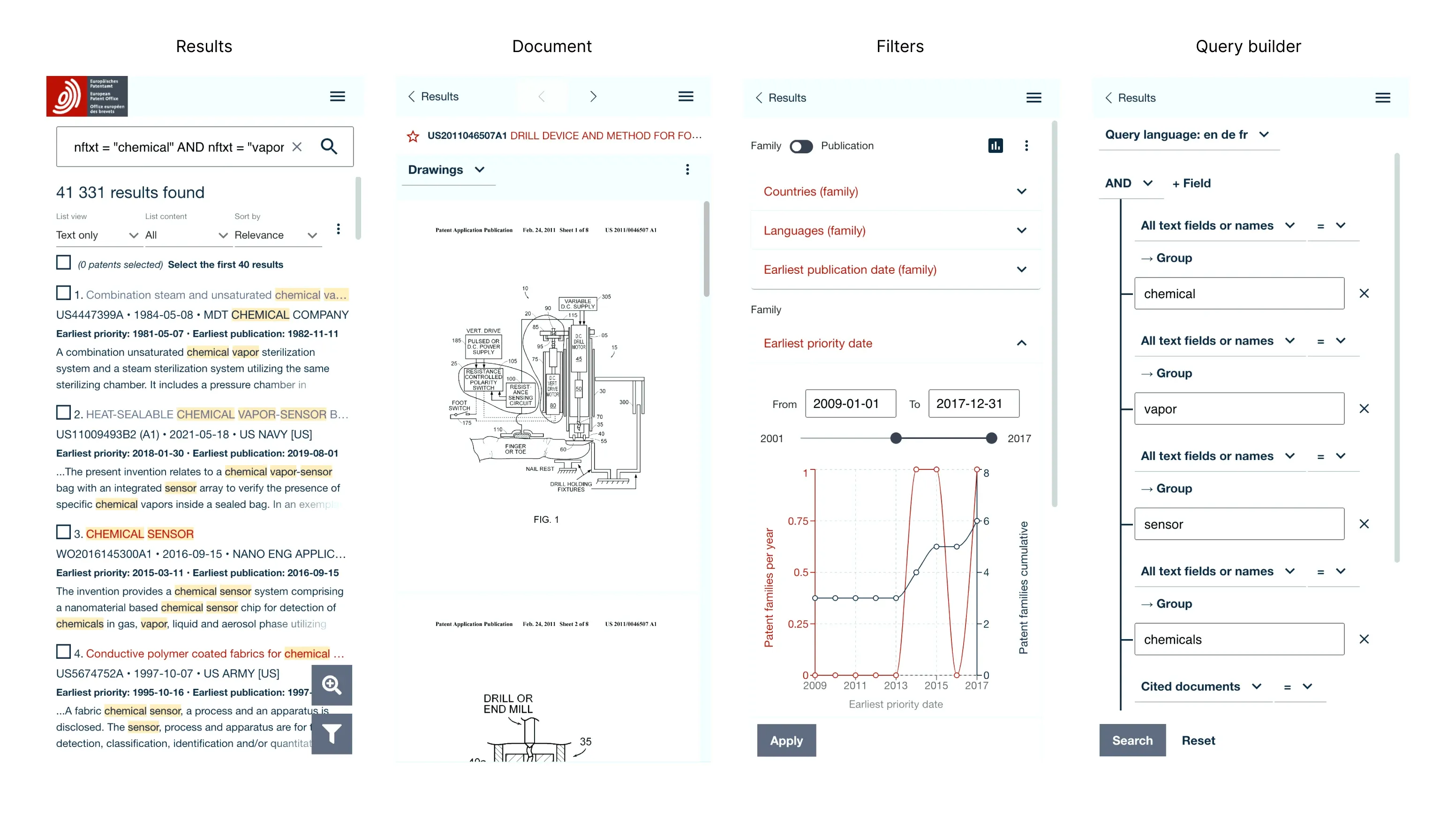
I mapped the software into four building blocks: results list, patent details, filters and query builder. Then I explored how they could share the screen, so that people never lose track of their search. Together with stakeholders, UX colleagues and search experts, we picked two or three proposals to prototype.
Let hundreds of users decide
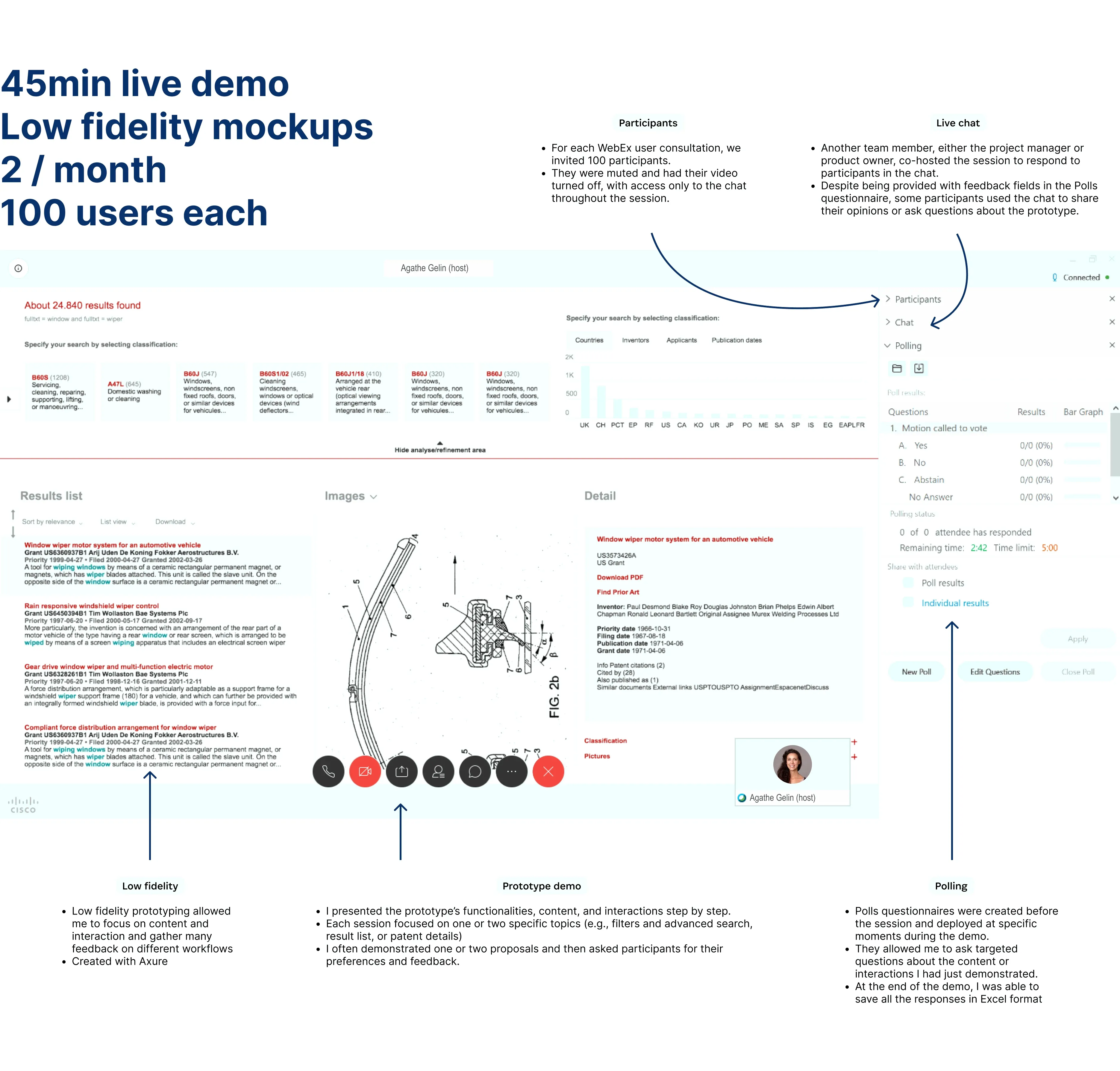
I presented the prototypes in live 45-minute webinars, twice a month, with around 100 users each time. Participants were muted and followed along in the chat, while a colleague answered their questions. Polls at key moments showed us which direction to take:
Designed one interface for every screen
After months of research and prototyping, the simplest approach suited users best. On desktop, panels appear or hide depending on the space available, and the results list always stays in view as the main navigation: when someone opens the filters or the query builder, the patent details step aside for a moment. On mobile, each block is one tap away from the results.
Built the style guide, and made it accessible
There was no finished style guide at the EPO at the time, so I created one from scratch with the corporate identity team in Munich, pushed for our own solutions where the website guidelines weren’t enough for an application, and made the application WCAG compliant.
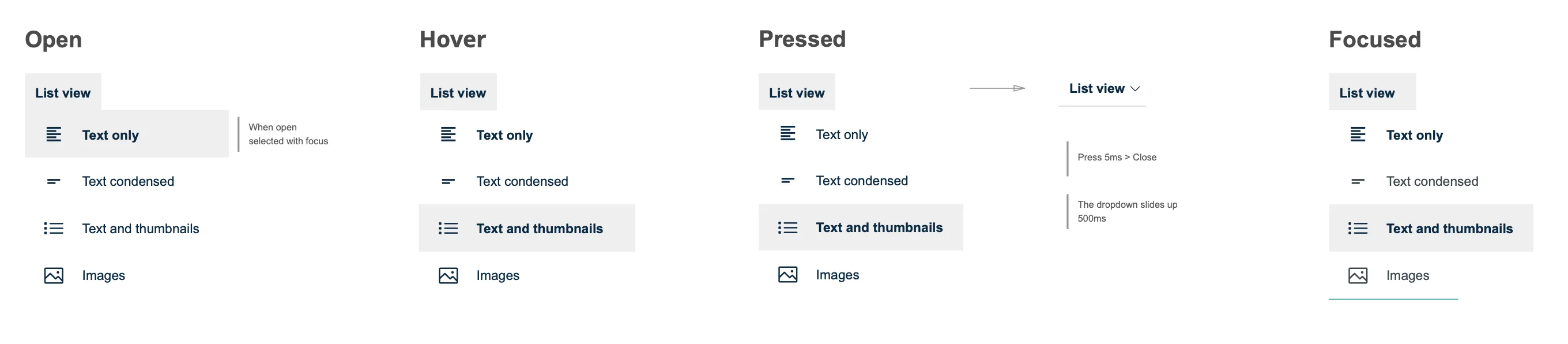
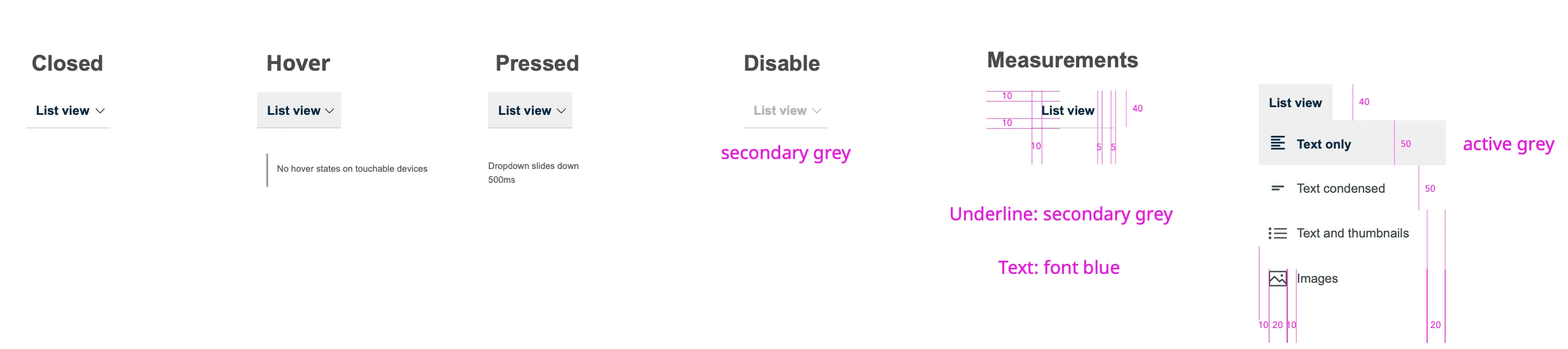
Go deeper: component specifications
Specified, implemented, iterated
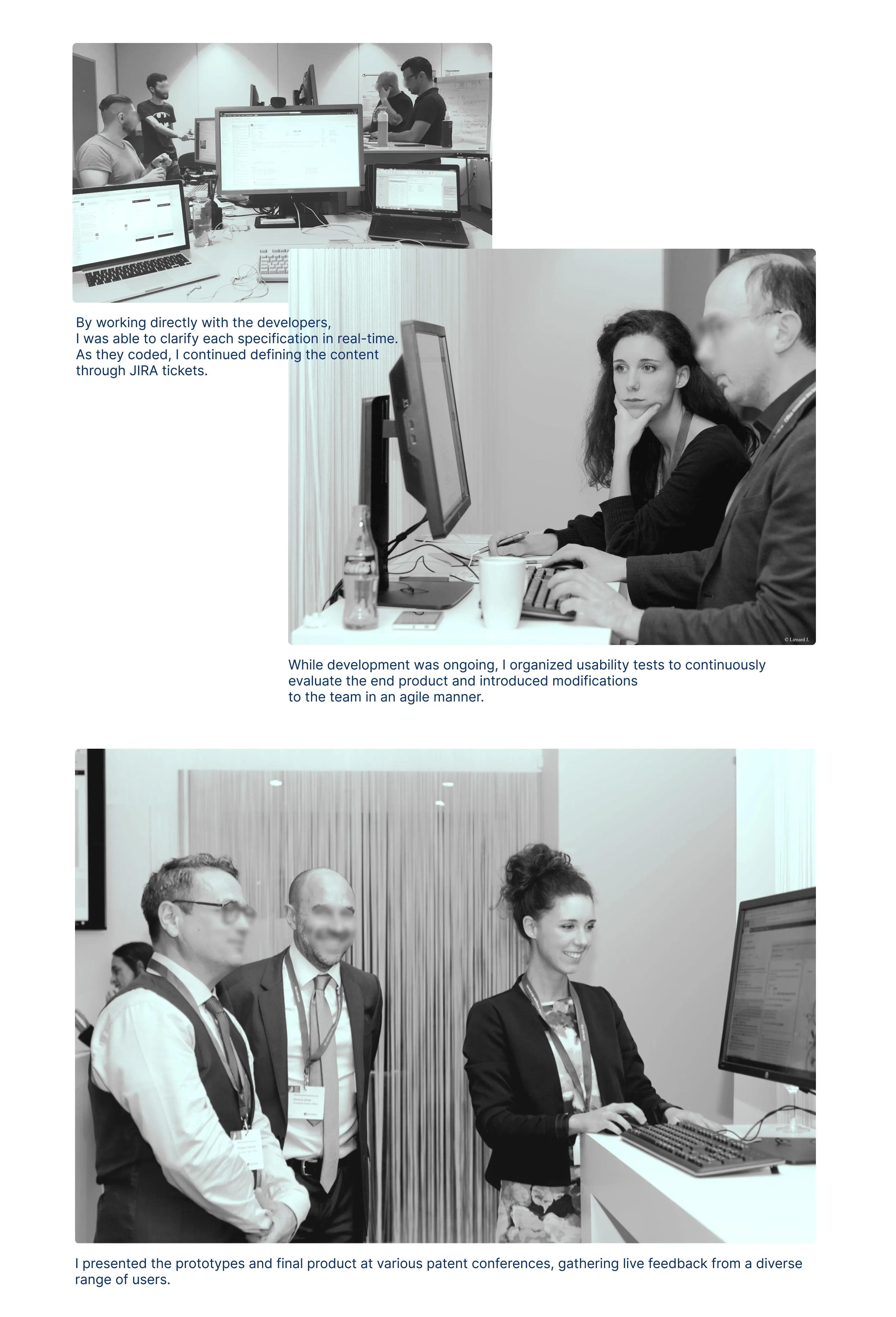
I worked side by side with the developers throughout the build and the beta, ran usability tests on the product as it was being built, and presented it at patent conferences to gather feedback from a wide range of users.
The result
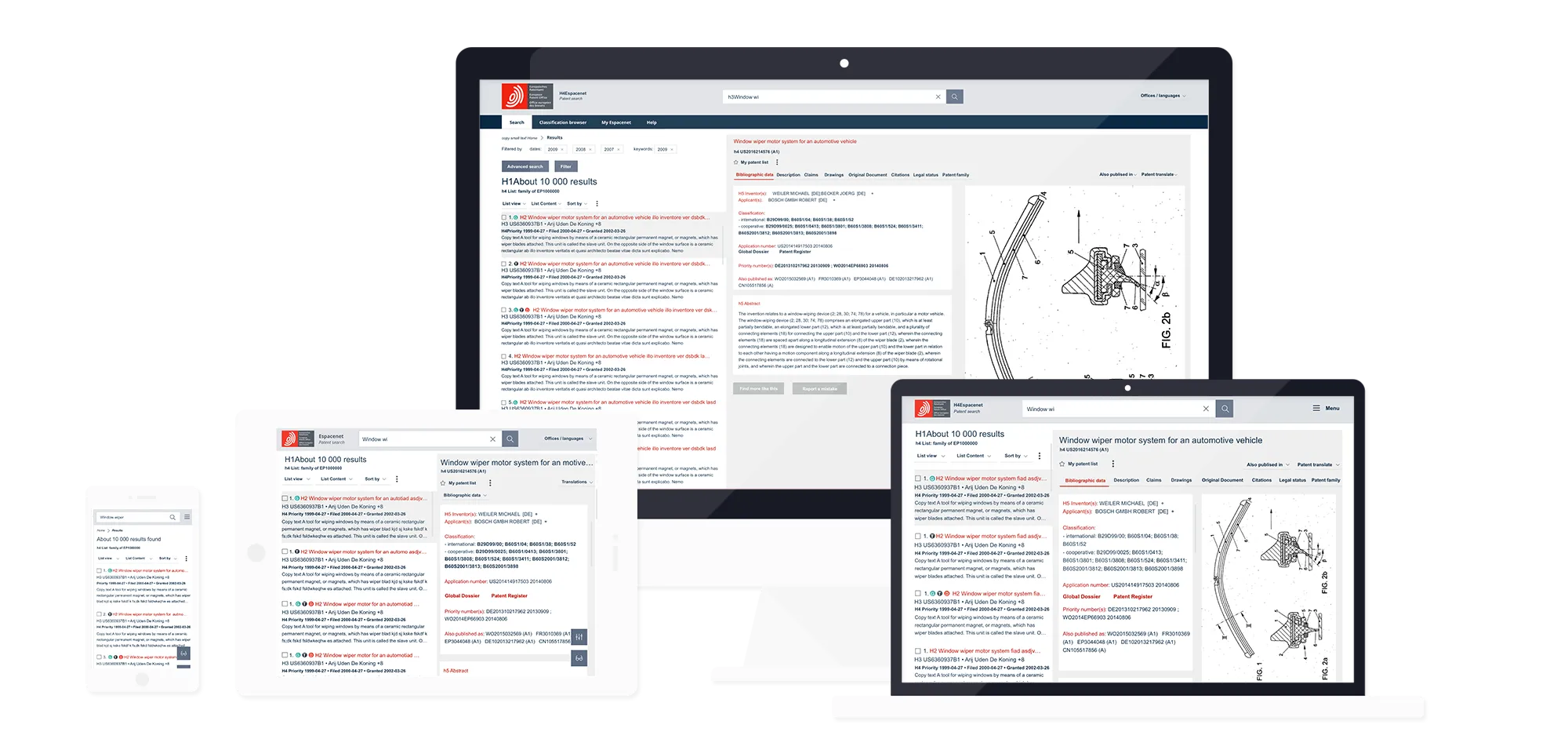
I presented the prototype to representatives of the 38 member states. The new search launched in November 2019, with strong praise inside and outside the EPO: a dynamic query builder, a richer and quicker results list, filters, an improved legal status overview, and a responsive design that works on any device.
Her handwriting in terms of great design, slick usability and style is everywhere in this product.
Johannes Schaaf, Product Owner, European Patent Office